
"I blew my account because my platform froze during a volatile market move."
I hear stories like this weekly. Traders lose serious money because they picked the wrong platform one that fails exactly when they need it most.
Your trading platform works as your mission control center. The wrong choice will sabotage even brilliant trading strategies. The best platform for futures trading directly impacts your bottom line, speed of execution, and stress levels during market hours.
Consider this: Did you miss trades because your order entry lagged? Have losses multiplied because your charts stopped updating during big market moves? These aren't just annoyances -- they're profit killers.
In this guide, we're cutting through the noise and breaking down what actually matters: speed, cost, usability, and whether the platform fits your trading style. No fluff. Just facts that help you stay fast, focused, and in control.

Understanding Futures Trading Platforms: The Basics
A futures trading platform serves as your gateway to the market for trading futures. Unlike basic stock trading platforms, futures platforms must handle the unique characteristics of futures contracts: leverage, expiration dates, and contract specifications.
The core components of quality futures trading platforms include:
-
Order execution system: The engine that routes your orders to the exchange
-
Market data feed: Provides real-time price information
-
Charting package: Tools for technical analysis and pattern recognition
-
Risk management tools: Features that help manage position sizing and stop losses
-
Account management: Tracks your performance, margin requirements, and balances
Futures platforms come in several varieties:
- 1.
Desktop applications: Downloadable software offering maximum speed and customization
- 2.
Web-based platforms: Accessible from any browser without installation
- 3.
Mobile applications: Trading on smartphones and tablets
- 4.
Professional platforms: Advanced tools for high-volume or institutional trading
For beginners wondering, "Where can I trade futures?" the answer includes both mainstream brokerages and specialized futures commission merchants (FCMs). Each offers different platforms for trading futures with varying strengths and weaknesses.
The right platform provides not just access to markets but also the specific tools that match your approach. A platform that works perfectly for another trader might not suit your needs at all. Your choice should reflect your personal trading style, technical requirements, and learning preferences.
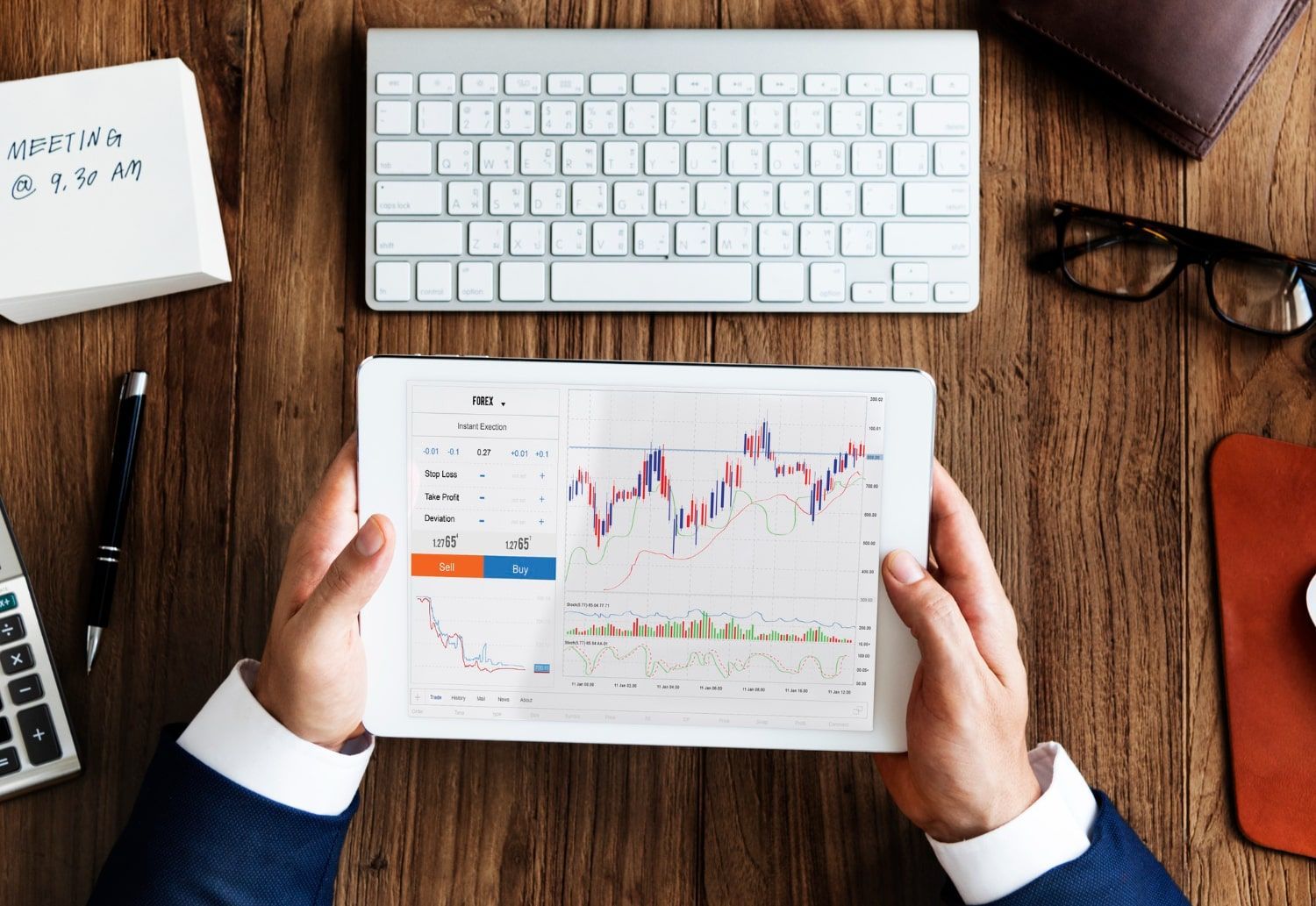
Critical Factors for Evaluating Futures Trading Platforms
Factor 1: Execution Speed and Reliability
In futures trading, milliseconds matter. The difference between the best platform for futures trading and an average one often comes down to execution speed. Fast markets wait for no one -- when you click "buy" or "sell," you need your order to reach the exchange immediately.
Execution speed impacts your trading in several concrete ways:
-
Price slippage: Slower execution means you might miss your intended price
-
Opportunity cost: Missed entries on fast-moving setups
-
Scalping capability: Fast-moving strategies require the fastest execution
The most critical speed factors include:
- 1.
Server location: Proximity to exchange servers reduces latency
- 2.
Connection stability: Consistent performance without disconnections
- 3.
Processing power: How quickly the platform handles complex calculations
Platform reliability becomes particularly crucial during volatile market conditions. When markets move dramatically, often the times with the greatest profit potential, some platforms crash or lag under increased load. Top futures trading platforms report up to 99.9%+ uptime, even during market chaos.
Real traders report major performance differences between platforms. Some experience consistent 50-100 millisecond delays on certain platforms, while others see sub-10 millisecond execution on premium services. For day traders and scalpers, this difference directly impacts profitability.
When evaluating platforms, request specific data on execution speeds and historical reliability during high-volatility events. The platform provider should share this information transparently.
Factor 2: Cost Structure and Transparency
Trading costs eat into profits quickly, especially for active traders. Understanding the full cost structure of platforms for trading futures helps you calculate your actual breakeven point on trades.
The main cost components include:
-
Commissions: Fees paid to the broker per contract traded
-
Exchange fees: Charges from the exchanges themselves
-
Market data fees: Costs for real-time price information
-
Platform fees: Charges for using specific trading software
Commission models vary significantly across providers:
- 1.
Per-side pricing: Separate commission for entry and exit
- 2.
Round-turn pricing: One fee covering both entry and exit
- 3.
Tiered pricing: Decreasing rates as your volume increases
- 4.
All-inclusive pricing: A Bundle of commissions and exchange fees
Many traders focus exclusively on the advertised commission rate but overlook hidden costs that can double their actual expenses. Watch for:
-
Inactivity fees: Charges for not meeting the minimum trading volume
-
Data feed surcharges: Extra costs for specific market data
-
Add-on feature costs: Fees for premium charting or analysis tools
-
Withdrawal fees: Charges to move your money out
The best platform for traders might end up being one that offers no surprises, but transparent pricing. Before opening an account, request a complete breakdown of all possible charges. Calculate your monthly cost based on your expected trading volume and required features.
Active traders should negotiate. Many platforms offer reduced rates for consistent volume so always investigate to find what's best for you--all costs add up over time.
Factor 3: Platform Usability and Interface
The interface design of trading platforms for your futures significantly impacts your daily experience. A cluttered, confusing platform creates stress and increases the likelihood of costly errors. Beginners particularly benefit from intuitive platforms that simplify the learning curve.
Key usability features to evaluate include:
-
Order entry efficiency: How quickly can you place, modify, and cancel orders?
-
Workspace customization: Can you arrange charts, watchlists, and order tickets to match your workflow?
-
Visual clarity: Does the platform present information clearly without overwhelming you?
-
Learning resources: Are tutorials and guides built into the platform?
Mobile capabilities have become increasingly important as trading extends beyond the desktop. Evaluate mobile apps for:
-
Feature parity: Does the mobile version offer the same critical functions as the desktop?
-
Performance: How quickly does the app respond during market hours?
-
Reliability: Does it maintain connections consistently?
-
Security: What protections exist for trading on public networks?
Nearly all reputable futures trading platforms offer demo accounts. Take full advantage of these before committing. A proper demo test should:
- 1.
Simulate your actual trading routine
- 2.
Test during both normal and high-volatility market conditions
- 3.
Include executing multiple order types
- 4.
Test customer service response times
Remember that usability is personal -- what works perfectly for one trader might frustrate another. The platform should match your specific preferences and trading habits. Many traders report that switching to a more intuitive platform reduced errors and improved performance, even without changing their strategies.
Factor 4: Trading Style Compatibility
Different trading approaches demand different platform capabilities. Selecting a platform aligned with your trading style dramatically improves your efficiency and results.
Day Trading Platforms
Day traders need futures trading platforms optimized for speed and efficiency. The best day trading platforms offer:
-
One-click trading: Place orders instantly without confirmation dialogs
-
Advanced order types: OCO (one-cancels-other), bracket orders, trailing stops
-
Multiple timeframe analysis: Seamlessly switch between chart intervals
-
DOM (Depth of Market) visualization: See order flow and market depth clearly
-
Hot key customization: Execute common actions with keyboard shortcuts
Leading platforms for day traders include NinjaTrader, TradeStation, and Sierra Chart. These platforms prioritize execution speed and workspace customization over simplified interfaces.
Swing Trading Platforms
Swing traders holding positions overnight need different capabilities:
-
Extended-hours data: Access to pre-market and after-hours information
-
Risk calculation tools: Position sizing and scenario analysis features
-
Economic calendar integration: Track upcoming market-moving events
-
Fundamental data access: Company and market fundamentals alongside charts
-
Alert systems: Notifications when key levels are reached
Popular swing trading platforms include ThinkorSwim, TradeStation, and Tradovate. These balance analytical depth with ease of use.
Position Trading Platforms
Long-term position traders benefit from:
-
Comprehensive historical data: Extended backtesting capabilities
-
Fundamental analysis tools: Economic indicators and market statistics
-
Portfolio heat mapping: Visual representation of exposure across markets
-
Correlation analysis: Understand relationships between different markets
-
Long-term risk management: Tools for managing extended market exposure
Many position traders favor platforms like TradingView Pro, eSignal, and CQG, which excel at comprehensive market analysis and long-term data visualization.
Scalping Platforms
Scalpers making ultra-short-term trades need the absolute fastest platforms:
-
Low-latency connections: Direct market access with minimal delay
-
Time and sales analysis: Detailed transaction history by tick
-
Level II data integration: Complete market depth visualization
-
Audio alerts: Sound notifications for specific market conditions
-
Advanced filtering: Tools to identify specific order flow patterns
Scalpers often choose platforms like CQG, Rithmic, or Sterling Trader Pro, which focus on professional-grade execution speed and order routing quality.
Your trading style will evolve over time. The best platform for futures trading should grow with you, offering both beginner-friendly features and advanced capabilities you'll need later. Many traders start with user-friendly platforms before transitioning to more specialized solutions as their skills advance.
Leading Futures Trading Platforms: A Balanced Review
The current market for trading futures offers diverse platform options ranging from industry giants to specialized boutique solutions. Understanding the strengths and target users of each helps you narrow your choices.
Mainstream Market Leaders
NinjaTrader
-
Strengths: Customizable charting, strategy development, simulation capabilities
-
Best suited for: Technical traders who want powerful charting and automated strategy testing
-
Notable feature: Extensive third-party add-on marketplace
TradeStation
-
Strengths: Robust programming language (EasyLanguage), comprehensive historical data
-
Best suited for: Traders who want to create custom indicators and automated systems
-
Notable feature: Strategy performance reporting with detailed analytics
ThinkorSwim
-
Strengths: Strong charting, options analysis tools, integrated futures trading
-
Best suited for: Multi-product traders who trade futures alongside stocks and options
-
Notable feature: Economic data visualization tools and market scanners
Interactive Brokers TWS
-
Strengths: Global market access, competitive pricing, institutional-grade execution
-
Best suited for: Cost-conscious traders who need access to international futures markets
-
Notable feature: Comprehensive risk management tools and portfolio analysis
Niche and Specialized Platforms
Sierra Chart
-
Strengths: Extremely fast, highly customizable, low monthly cost
-
Best suited for: Technical traders who prioritize speed and custom development
-
Notable feature: Advanced DOM trading and footprint charts
Tradovate
-
Strengths: Cloud-based, modern interface, subscription pricing model
-
Best suited for: Mobile-first traders who want simplified commission structures
-
Notable feature: Unlimited commission-free trading with subscription plans
Volsys/Volbook
-
Strengths: Advanced order flow analysis, specialized for futures markets
-
Best suited for: Order flow traders who need detailed market depth visualization
-
Notable feature: Volume profile and order flow indicators
TradingView
-
Strengths: Social trading features, easy-to-use interface, web-based accessibility
-
Best suited for: Beginners and visual traders who value community insights
-
Notable feature: Social sharing of charts and trade ideas
Each platform offers unique advantages. The ideal choice depends on your specific requirements, trading frequency, and preferred markets. Many experienced traders use multiple platforms---perhaps one for analysis and another for execution.
The Support Factor: Often Overlooked but Critical

Quality support can significantly impact your trading success, especially when starting out. Even the most reliable platforms for trading futures experience occasional issues that require prompt resolution.
Evaluate support quality through:
- 1.
Availability: 24/7 support vs. market hours only
- 2.
Response speed: Minutes vs. hours for critical issues
- 3.
Knowledge depth: Technical expertise of support staff
- 4.
Communication channels: Phone, chat, email, or social media
- 5.
Resource library: Documentation, videos, and tutorials
Educational resources vary dramatically across platforms. The best providers offer:
-
Platform-specific training: Detailed guides for using all features
-
Market education: Content about futures markets and contract specifications
-
Strategy development: Trading methodology and technical analysis education
-
Risk management: Tools and education for preserving capital
MyFundedFutures partners with traders by providing additional platform guidance and support. Our multi-channel support system includes live chat, an active Discord community, and email support. The firm also maintains a comprehensive help center with detailed guides on platform usage and trading rules.
When evaluating platforms, test the support team before opening an account. Call with specific questions and assess their responsiveness and expertise. A support team that understands both their platform and futures trading will prove invaluable during your trading journey.
Aligning Platform Choice with Your Trading Journey
As your skills evolve, your platform needs will change. Most successful traders start with beginner-friendly platforms that emphasize ease of use before graduating to more sophisticated solutions.
For new traders, prioritize:
-
Clean, intuitive interfaces
-
Strong educational resources
-
Reliable customer support
-
Basic charting and order entry
-
Reasonable costs
As you advance, look for:
-
Faster execution
-
Advanced order types
-
Custom indicator development
-
API access for automation
-
More data feeds and timeframes
Understanding how to get funded through proprietary trading firms adds another dimension to platform selection. As example, our platform supports multiple trading platforms, including NinjaTrader, TradingView, Volsys/Volbook, Tradovate, Volumetrica, ATAS, and Quantower, giving traders flexibility in their platform choice.
Our funding programs have specific requirements that your platform must accommodate. Starter accounts have a 40% consistency rule in the funded stage, meaning your platform should help you track daily profit percentages. Expert accounts have no consistency rule but utilize a buffer zone policy that affects withdrawals---your platform should help you monitor these thresholds.
MyFunded Futures recently enhanced its market data by partnering with dxFeed to provide high-quality, real-time futures market data. This integration benefits traders by providing more accurate and comprehensive market information directly through supported platforms.
The right platform combined with a funded account creates a powerful foundation for trading success. This partnership approach helps traders focus on execution quality rather than capital preservation concerns.
The Foundation of Futures Trading Success

As we can now see, the best platform for futures trading aligns with your specific trading style, technical needs, and experience level.
Focus on four key factors: execution speed, cost transparency, usability, and compatibility with your trading approach. Fast, reliable execution prevents slippage and missed opportunities. Clear cost structures help you calculate profitability accurately. Intuitive interfaces reduce errors and stress. Most importantly, a platform tailored to your specific trading style---whether day trading, swing trading, position trading, or scalping -- dramatically improves your efficiency.
Bottom line? The "best" futures trading platform is the one that matches your strategy, handles volatility without blinking, and keeps fees from eating your edge.
Don't let a slow interface or hidden fee structure be the reason you miss your next big trade. Test-drive platforms, dig into their execution data, and make sure they're battle-tested for how you trade.
MyFunded Futures can support your journey by providing capital access alongside professional guidance. Our diverse account types -- Starter, Starter Plus, Expert, and Evaluation-To-Live---each have different trading parameters that should inform your platform selection. The combination of the right futures trading platforms and funded account structures creates ideal conditions for trading growth.
Invest time in a thorough platform evaluation now to prevent costly switches later. Your platform choice will impact every trade you make -- choose wisely.
Ready to dive in?
Explore our challenge accounts, pick the one that fits you best, and start your journey to getting funded.
Explore Accounts¹This material is provided for educational purposes only and should not be relied upon as trading, investment, tax, or legal advice. All participation in MyFundedFutures (MFFU) programs is conducted in a simulated environment only; no actual futures trading takes place. Performance in simulated accounts is not indicative of future results, and there is no guarantee of profits or success. Fewer than 1% of participants progress to a live-capital stage with an affiliated proprietary trading firm. Participation is at all times subject to the Simulated Trader Agreement and program rules.
Frequently Asked Questions
Rate this article
Related Posts
Read our most popular posts

Announcing: MyFundedPerps
MyFunded announces MyFundedPerps, a new prop-trading platform expanding into perpetual futures and digital assets. Built on the foundation of MyFundedFutures with enhanced technology, it offers traders access to multiple markets and asset classes.
Benefits of Short Selling in Futures Versus Stocks
Short selling stocks comes with borrow fees, locate requirements, the uptick rule, and the pattern day trader rule. Futures have none of those barriers; a short entry works exactly like a long entry, because the market was built that way. This guide covers the mechanics on both sides, where futures shorts hold a real edge, and what to know before shorting inside a funded account.

Benefits of Trading With Prop Firm Plans With No Daily Loss Limit
Daily loss limits are one of the most common rules in prop trading — and one of the most restrictive. Many traders get shut down early in the day even though the overall account is healthy. This guide explains what daily loss limits do, why they can hurt long-term performance, what changes when a firm removes them, and how MyFundedFutures structures daily risk across its Rapid, Builder, and Pro plans — from no limit at all to a soft pause that never breaches the account.